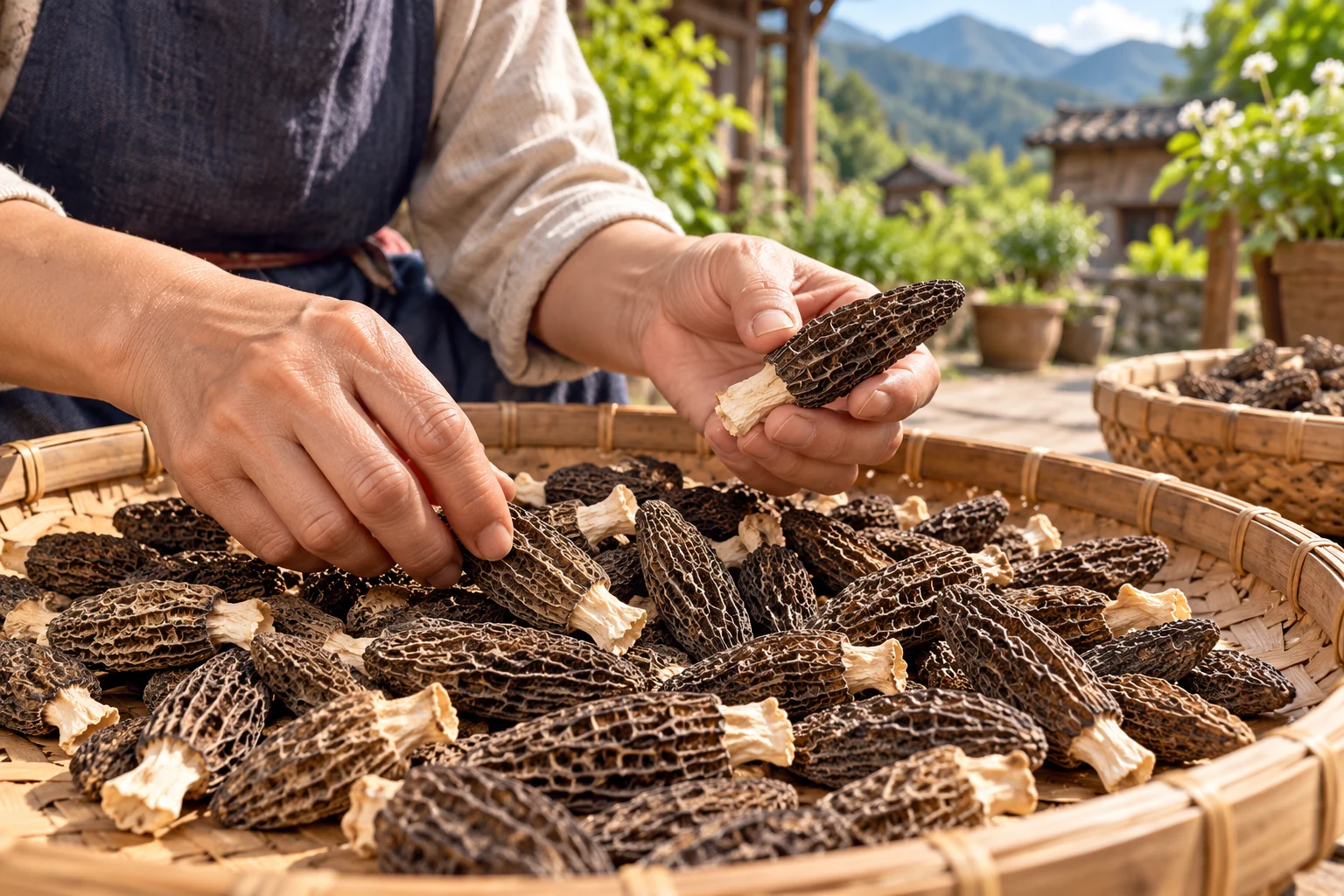
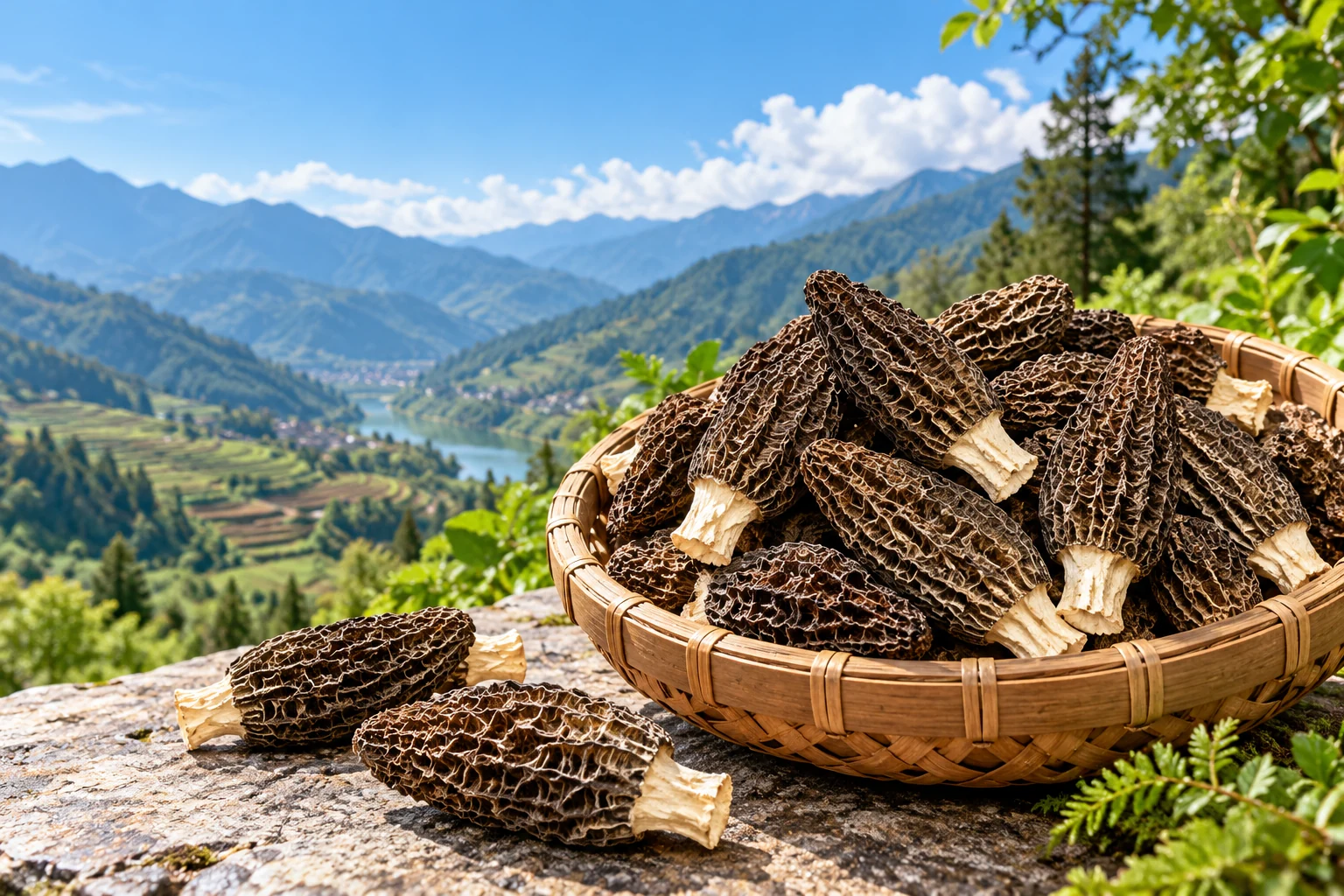
A grade label can be useful shorthand inside one company, yet it may mean something different to another supplier or buyer. For dried morels, an effective specification translates that label into features that your team can inspect. The aim is a common description of the product you intend to buy, not a universal grading system.
 AI-generated · Actual photos to follow
Define what is being measured
Start by specifying whether a size refers to the cap or to the whole mushroom including the stem. State the unit and the method your team expects to use. If you are comparing two quotations, make sure both describe the same measurement. A photograph showing a large mushroom beside a hand can provide visual context, but it is not a measured size specification.
Treat appearance as a separate requirement
Size does not describe cap integrity, stem length or the proportion of broken pieces. Record these features separately. A foodservice buyer may prioritize presentation, while an ingredient buyer may evaluate the material differently. Tell your supplier which characteristics are essential and where natural variation is acceptable. Do not assume every piece in a mixed lot will look identical to a selected photograph.
Agree on tolerances and assessment
An acceptance range is more useful when both parties know how it will be assessed. Ask how a representative sample will be selected and whether an allowance is measured by count, weight or another agreed method. The right approach depends on the transaction, but it should be explicit. Avoid a requirement such as “no small pieces” without defining what counts as small.
Keep photographs and samples in their proper role
Ask for representative images of the proposed lot as well as the written description. Close-ups are useful for texture and appearance; a wider image helps show variation. Samples support evaluation, but the parties still need to confirm how they relate to the actual shipment. Save the approved description with the quotation so your receiving team knows what was agreed.
Make specifications easy to reuse
Give the approved brief an internal reference or revision date. When your buying team requests a repeat order, confirm whether the same requirements still apply and ask about the new lot. This helps avoid quietly replacing a physical specification with the name of a previous order. At MorchellaHub, you can share your required measurements before requesting a quotation.
Size bands to use in your inquiry
Common size requests supplied by Dianbei Select include 2–3, 3–5, 5–7, 7–9 and 9 cm+, with 4–6 cm as an alternative band. Confirm the measurement after trimming and assess stem length separately. Small whole pieces are not the same as broken material.
View the size comparison tableYour purchasing checklist
- Cap or whole-piece measurement defined
- Size range and measurement unit included
- Stem and broken-piece requirements separated
- Sample selection and assessment basis agreed
Discuss your Yunnan morel requirements
Dianbei Select is an independent trading company working with cooperating growers. Share your specifications, quantity and destination for an individual discussion.
Prepare a sourcing inquiry